November 19, 202614 min read
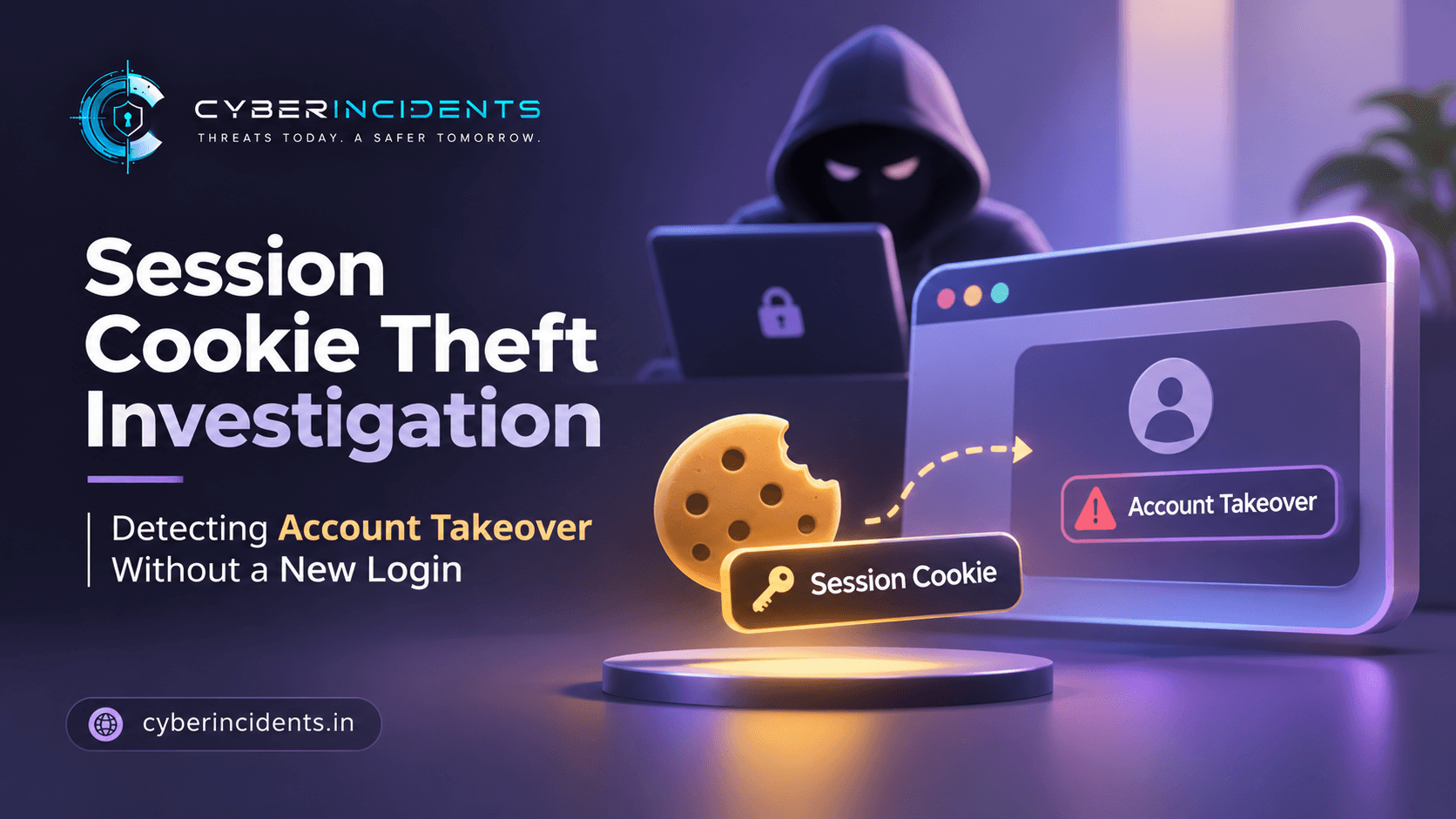
Session Cookie Theft Investigation: Detecting Account Takeover Without a New Login
Identity Compromise / Session Hijacking
Read More→
Incident response, digital forensics, threat hunting, investigations, and cybersecurity case studies.
10
Articles
Incident Investigation Intelligence
Identity Compromise / Session Hijacking
Read More→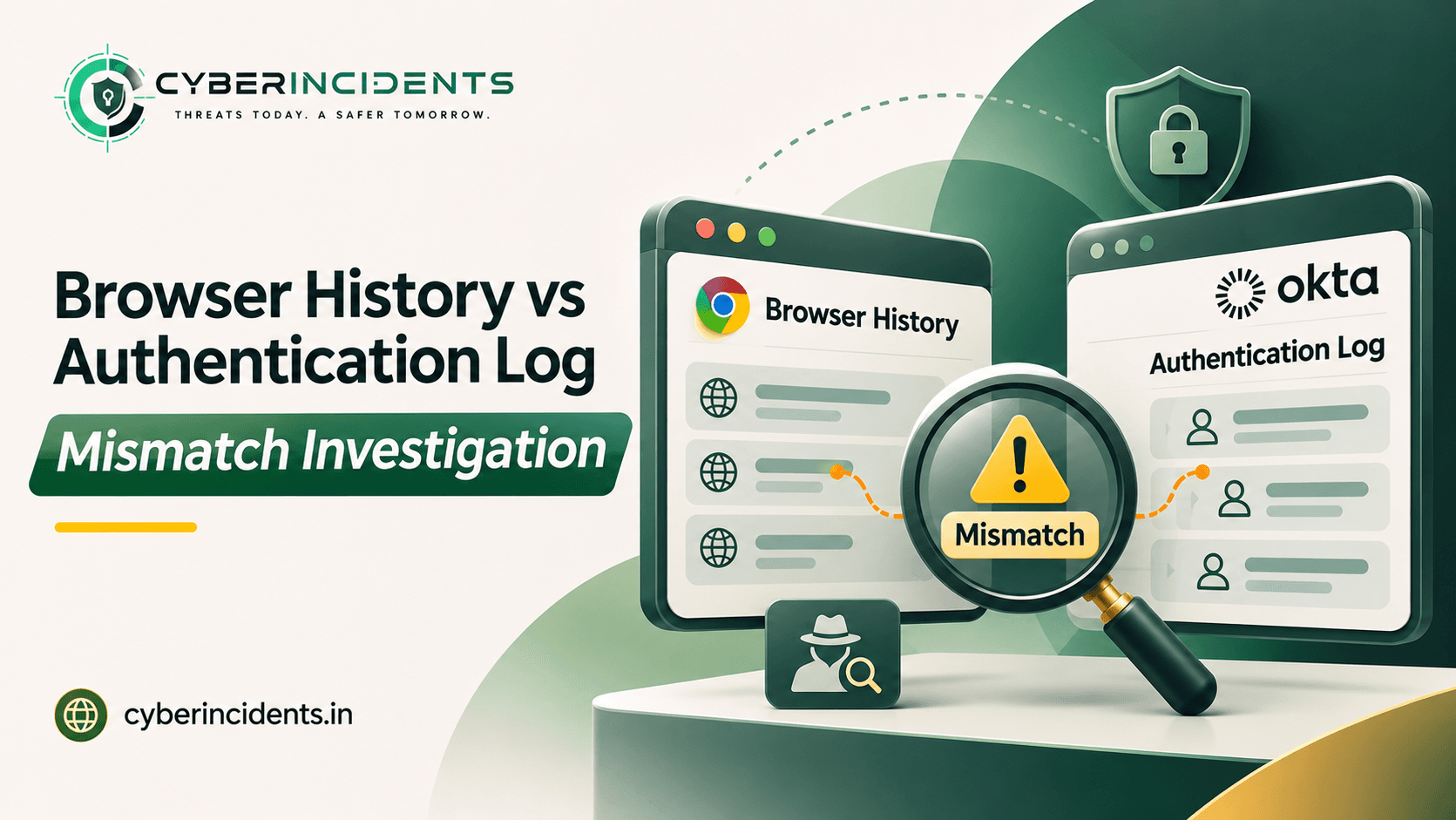
SOC Investigation
Read More→
Investigation
Read More→
Homograph attacks
Read More→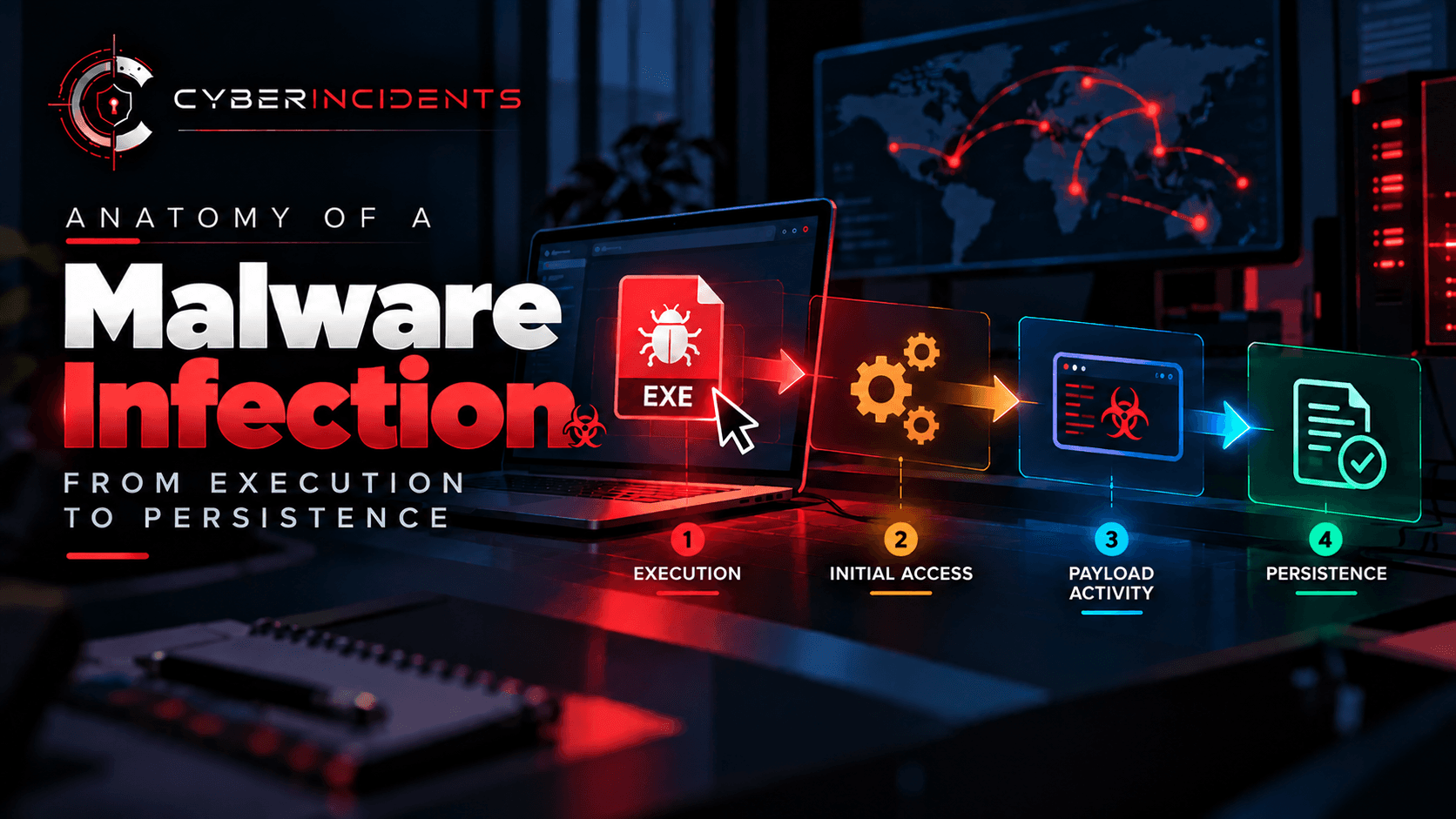
A malware infection rarely ends when a malicious file runs. After execution, malware may attempt to establish persistence, evade security controls, collect information, communicate with external infrastructure, or prepare the system for further attacks. Understanding this sequence helps SOC analysts reconstruct what happened, identify compromised systems, and determine whether an attacker still has access.
Read More→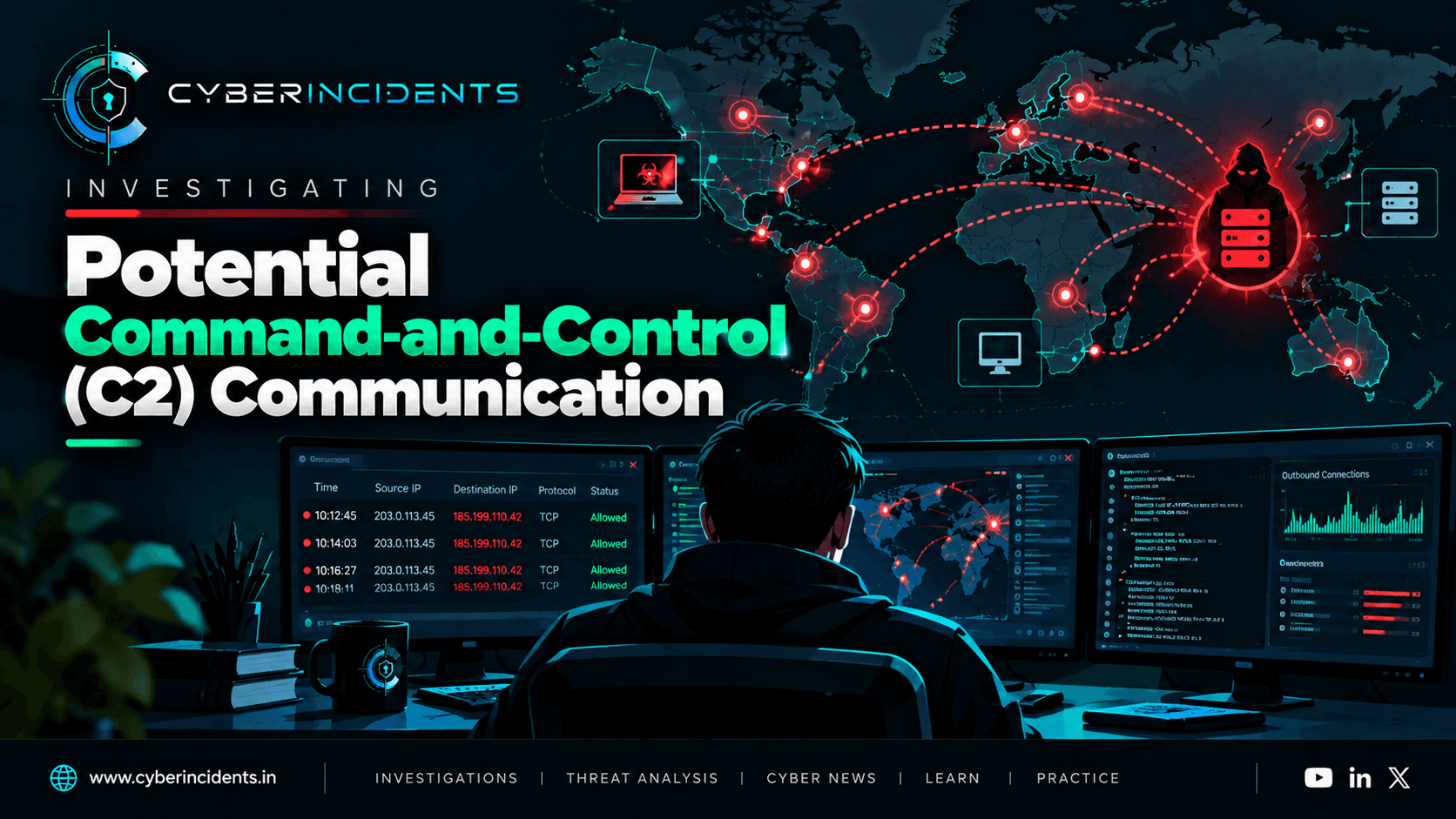
Command-and-Control (C2) communication is the communication channel an attacker uses to interact with compromised systems. Through C2 infrastructure, attackers may issue commands, collect information, transfer files, maintain access, or coordinate additional stages of an intrusion. Potential C2 activity can appear as unusual DNS queries, recurring outbound connections, suspicious HTTPS sessions, unexpected communication with unfamiliar domains, or network traffic generated by compromised processes. For SOC analysts, investigating suspected C2 requires correlating network telemetry with endpoint activity, DNS records, threat intelligence, and authentication events. The objective is to determine whether a system is communicating with attacker-controlled infrastructure, identify the affected hosts, and contain the threat before the intrusion progresses.
Read More→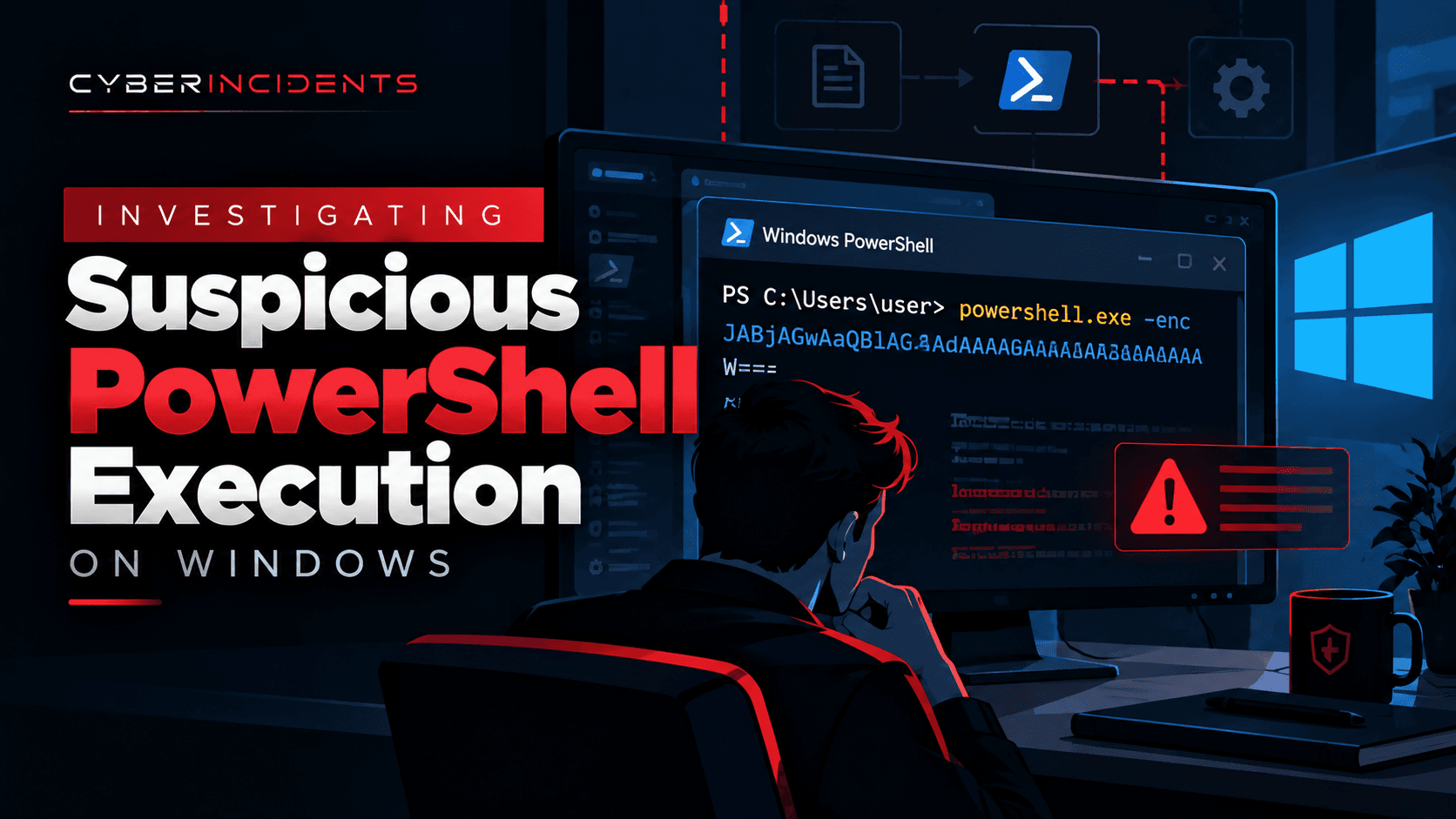
PowerShell is a legitimate Windows command-line shell and scripting environment widely used for system administration, automation, and security management. However, attackers also abuse PowerShell to execute malicious commands, download payloads, collect system information, establish persistence, and carry out post-compromise activities. Because PowerShell is a trusted administrative tool, suspicious execution can be difficult to distinguish from normal operations. Commands involving encoded content, hidden windows, remote script downloads, unusual parent processes, or unexpected network connections may warrant investigation. For SOC analysts, the goal is to determine who launched PowerShell, which command was executed, what process initiated it, whether external resources were contacted, and whether the activity resulted in compromise.
Read More→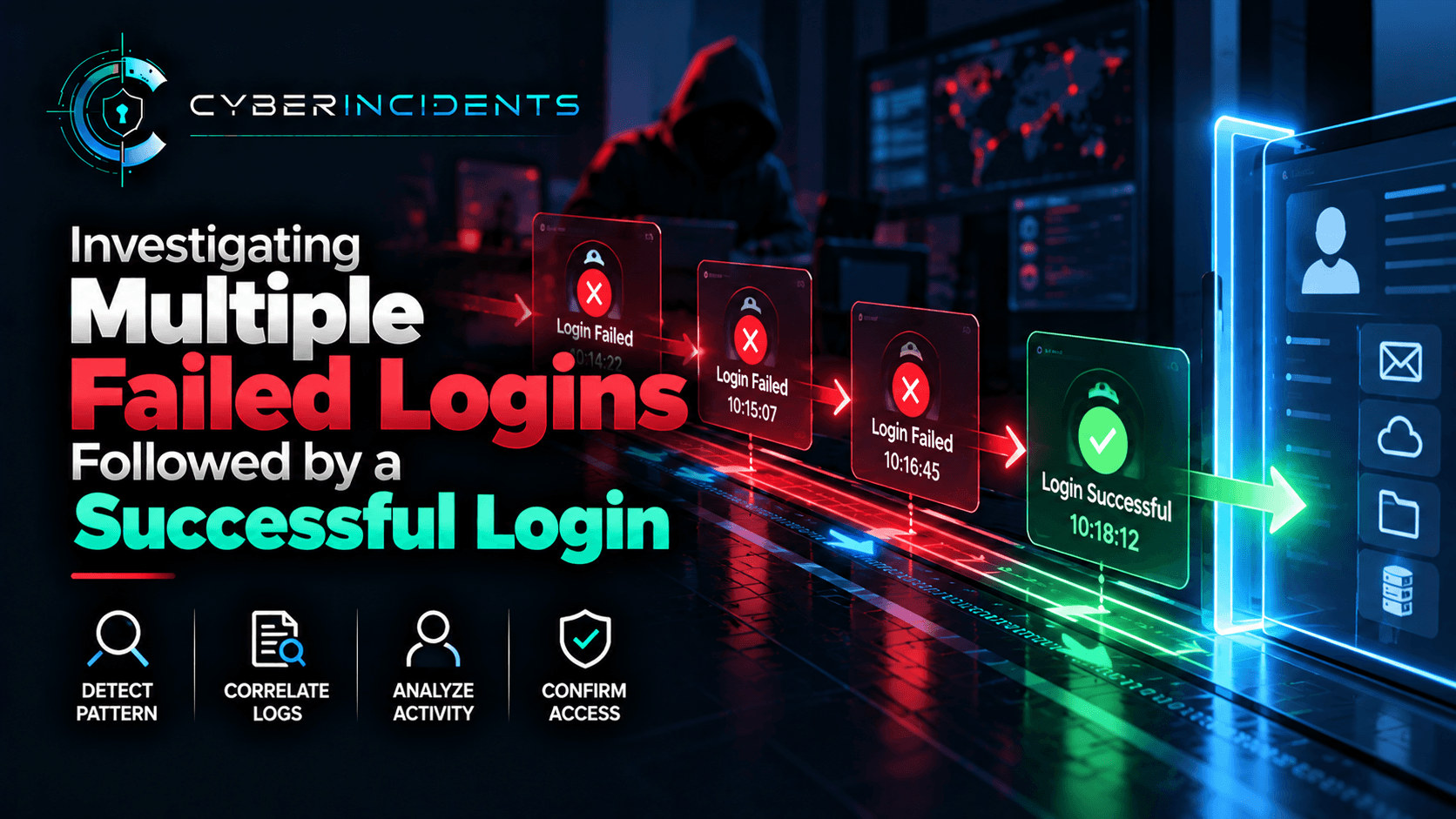
Multiple failed login attempts followed by a successful login can indicate a brute-force attack, password guessing, credential stuffing, or an employee repeatedly entering an incorrect password. The successful authentication makes the sequence particularly important because it may indicate that an attacker eventually obtained valid credentials. However, this pattern alone does not confirm a compromise. A SOC analyst must investigate the source IP address, targeted account, authentication method, device information, login location, and activity following the successful authentication. The objective is to determine whether the event represents legitimate user behaviour, suspicious authentication activity, or a confirmed account compromise.
Read More→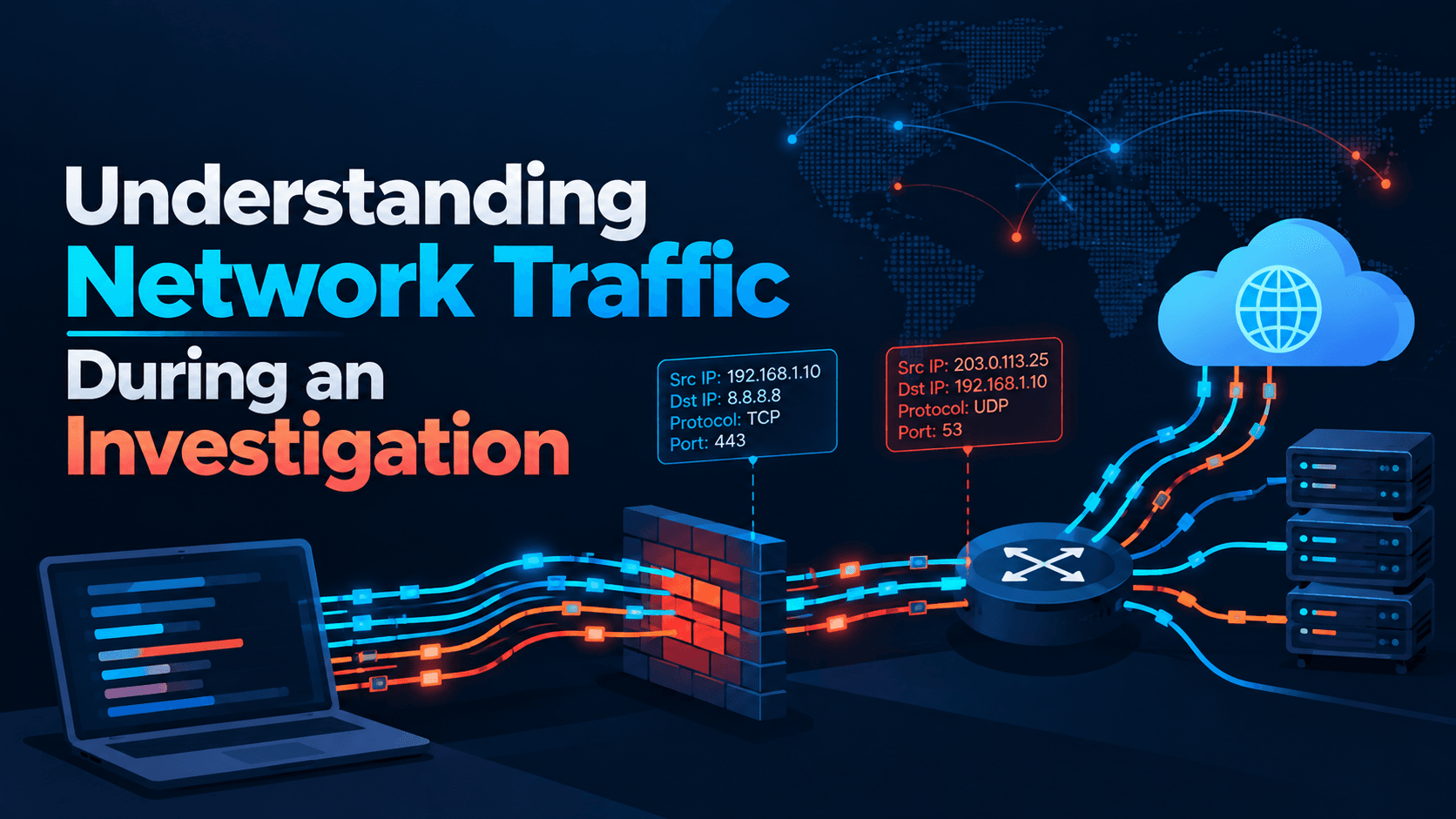
Level: Intermediate
Read More→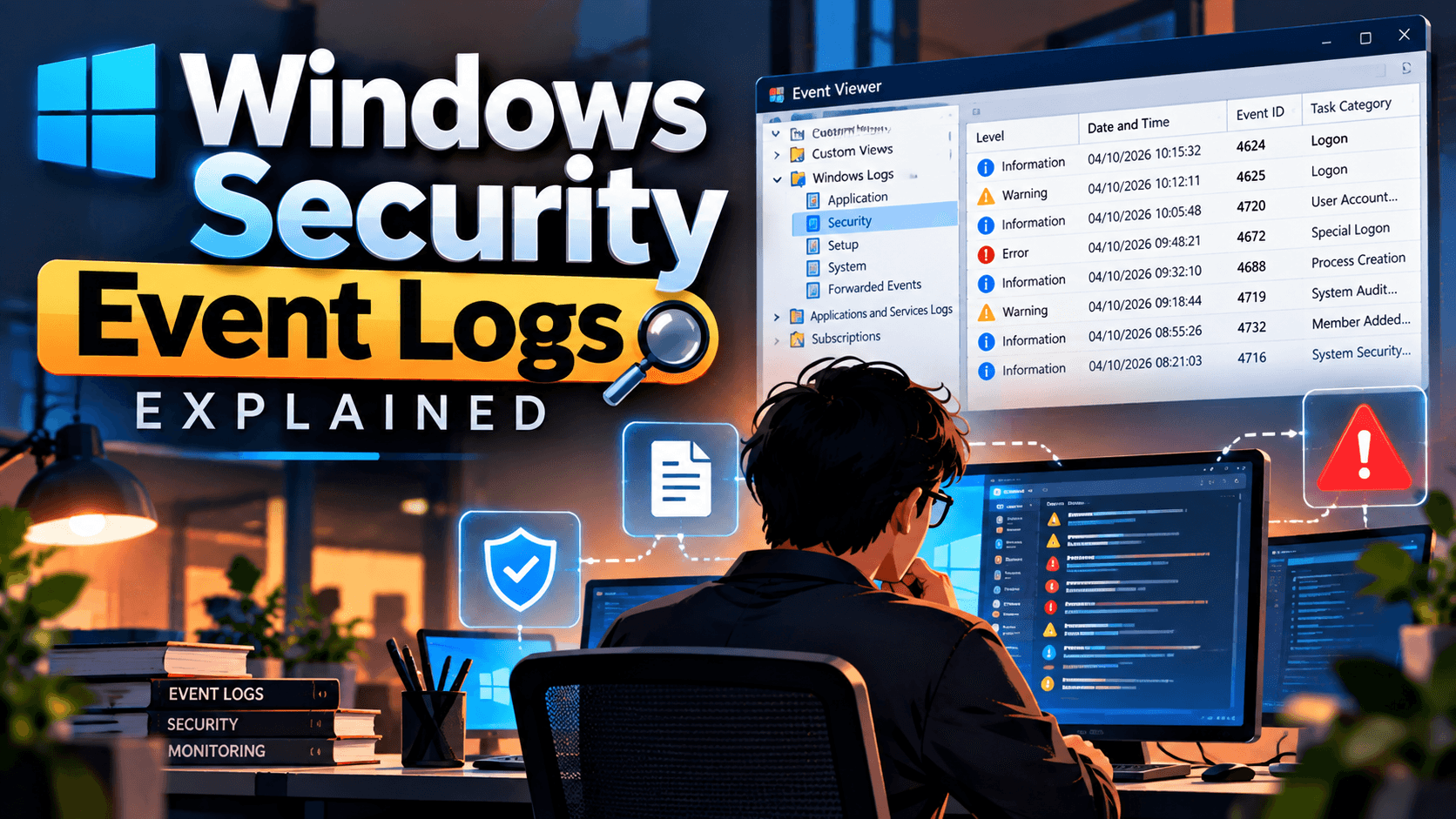
Windows Security Event Logs Level: Intermediate
Read More→3 entries, most recent posts.
Vishing
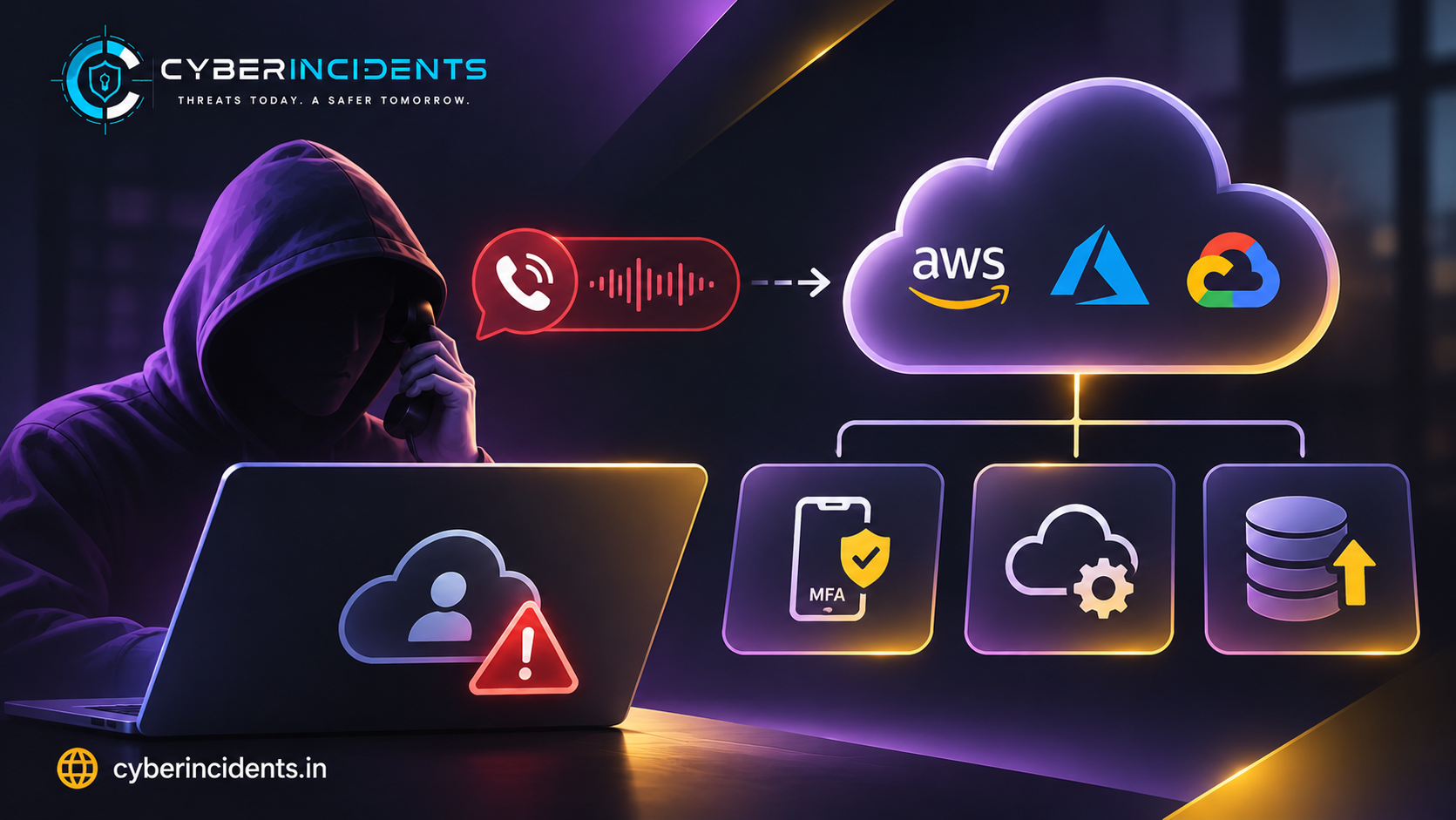
Identity Theft and Data Extortion
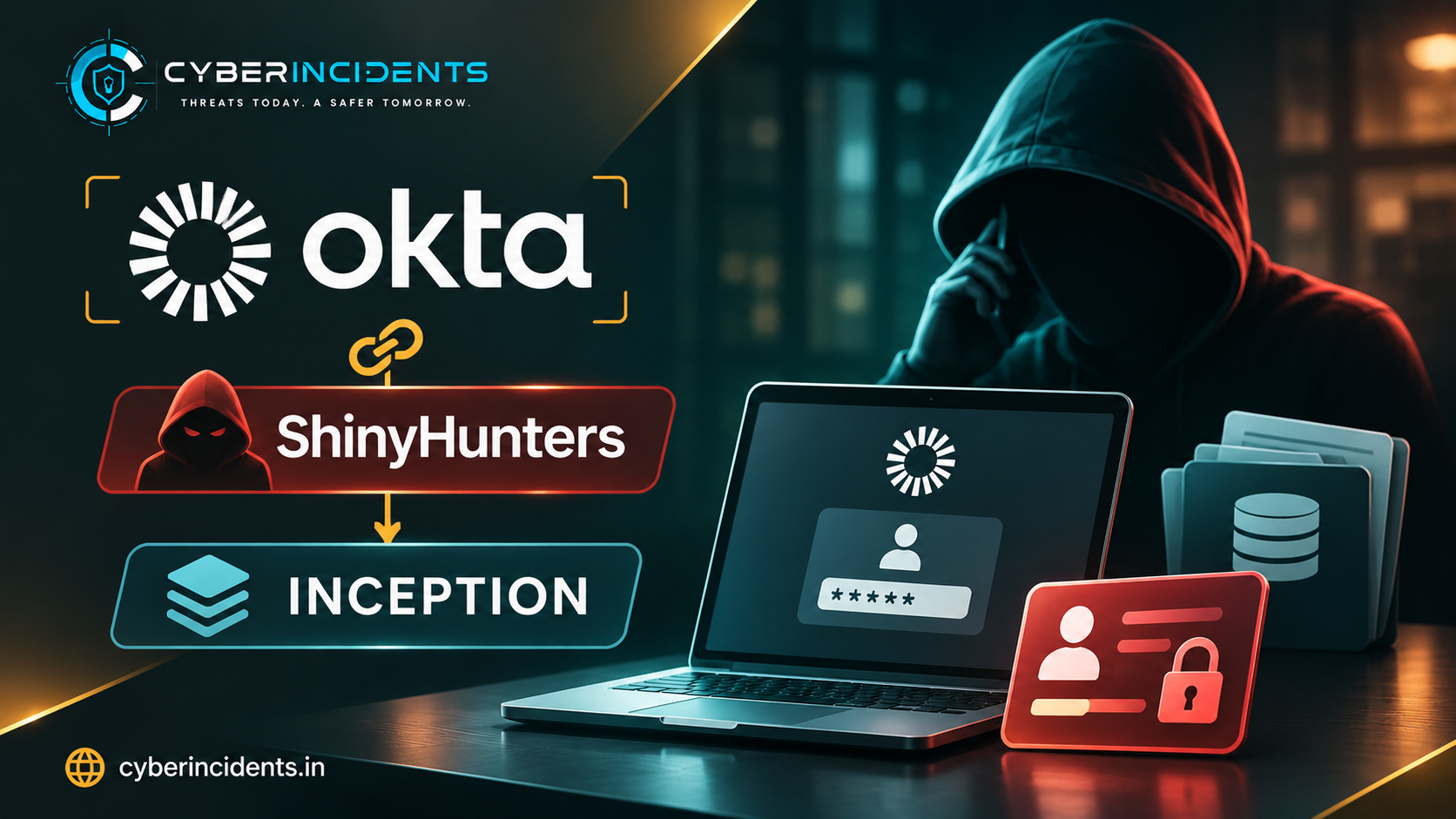
AI-Assisted Autonomous Intrusions