Identity & Credential Attacks
Identity & Credential Attacks understand the Basics Level: Beginner
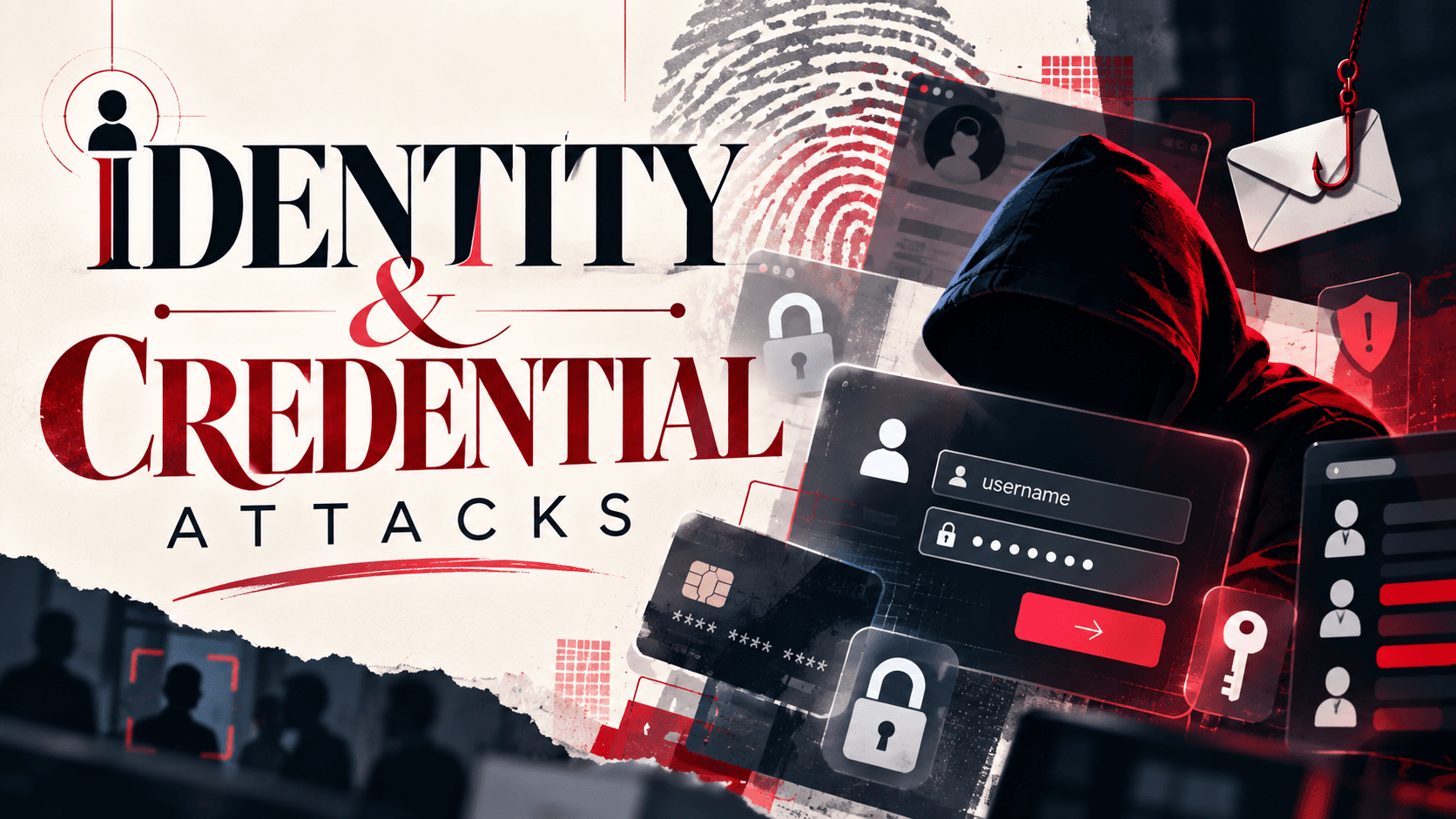
Identity and credential attacks are cyberattacks that target user accounts, passwords, authentication mechanisms, access tokens, and other forms of digital identity.
Instead of directly attacking a server or application, attackers often target the identity of a legitimate user. Once an account is compromised, the attacker may be able to access email, cloud services, corporate applications, databases, or other resources available to that user.
What Are Credentials?
Credentials are information used to prove someone's identity.
Common examples include:
Usernames and passwords
API keys
Authentication tokens
Session cookies
SSH keys
Access tokens
Multi-factor authentication (MFA) credentials
If an attacker obtains valid credentials, they may be able to appear as a legitimate user.
Common Identity & Credential Attacks
1. Brute-Force Attacks
In a brute-force attack, an attacker repeatedly attempts different passwords until the correct password is discovered.
Strong passwords, account lockout policies, rate limiting, and MFA can make these attacks more difficult.
2. Password Spraying
Instead of trying many passwords against one account, attackers try one or a small number of commonly used passwords against many accounts.
For example:
Password → Many usernames → Authentication attempts
This technique can help attackers avoid account lockouts that would occur from repeatedly targeting a single account.
3. Credential Stuffing
Credential stuffing uses previously stolen username/password combinations against other services.
This works because people sometimes reuse the same password across multiple websites.
Stolen credentials → Automated login attempts → Reused password → Account compromise
4. Phishing-Based Credential Theft
Attackers may create fake login pages or send convincing messages that encourage victims to enter their credentials.
The stolen credentials can then be used to access the legitimate service.
5. Pass-the-Hash
Pass-the-Hash is an attack technique commonly associated with Windows environments.
Instead of needing to know a user's actual password, an attacker who obtains a password hash may attempt to use that hash to authenticate to other systems.
This can become particularly dangerous when privileged credentials are compromised.
6. Pass-the-Ticket
Pass-the-Ticket involves abusing Kerberos authentication tickets to gain unauthorized access.
An attacker who obtains a valid ticket may attempt to use it to access resources without knowing the user's password.
7. Kerberoasting
Kerberoasting targets service accounts in Active Directory environments.
Attackers request Kerberos service tickets associated with service accounts and may attempt to crack the encrypted portion of those tickets offline to recover the account's password.
Weak service-account passwords can make this technique particularly effective.
8. Session and Token Theft
Modern applications frequently use session cookies and authentication tokens to maintain a user's authenticated session.
If an attacker obtains a valid session token, they may be able to impersonate the user without directly obtaining their password.
Why Identity Attacks Are Dangerous
Identity attacks can provide attackers with legitimate-looking access.
This makes them particularly challenging because the activity may initially appear to come from a normal user account.
A compromised account could potentially provide access to:
Corporate email
Cloud platforms
Internal applications
Databases
Source-code repositories
SaaS applications
Sensitive company information
If the compromised account has elevated privileges, the potential impact can be significantly greater.
How Organizations Detect Identity Attacks
Security teams commonly monitor:
Unusual login locations
Impossible-travel events
Repeated failed authentication attempts
Password-spraying patterns
New devices or sessions
Unusual MFA activity
Suspicious token usage
Privileged account activity
Authentication from unusual IP addresses
Access to resources that the user normally does not access
Security teams can correlate identity provider logs, endpoint telemetry, VPN logs, cloud audit logs, and application logs to identify suspicious activity.
How to Protect Against Identity Attacks
Organizations can reduce the risk through:
Strong and unique passwords
Multi-factor authentication (MFA)
Phishing-resistant authentication
Password managers
Conditional access policies
Least-privilege access
Privileged Access Management (PAM)
Regular access reviews
Monitoring authentication activity
Disabling unnecessary accounts
Protecting service accounts
Detecting leaked credentials
Identity Attack Chain
A simplified identity attack can look like:
Credential Theft → Authentication → Account Compromise → Privilege Abuse → Resource Access → Data Theft
However, not every identity attack follows this exact sequence. Some attacks abuse authentication mechanisms, tokens, or existing sessions rather than directly stealing a password.
Key Takeaway
Identity is one of the most important security boundaries in modern environments.
If an attacker can successfully become a legitimate user, traditional network and endpoint controls may not immediately recognize the activity as malicious.
For this reason, organizations increasingly focus on Identity Threat Detection and Response (ITDR), strong authentication, least privilege, continuous monitoring, and Zero Trust principles.
Latest posts
3 entries, most recent posts.
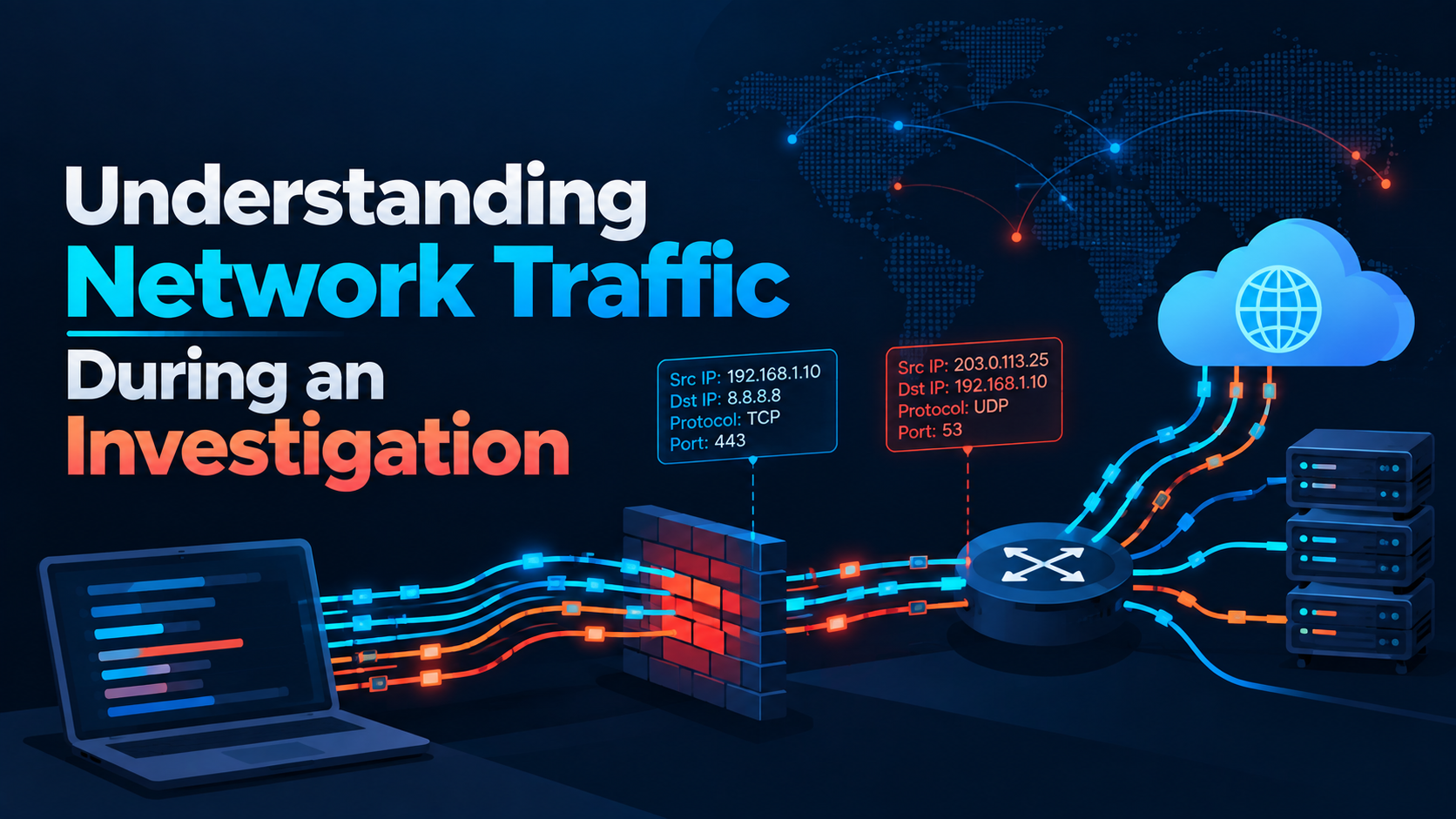
Understanding Network Traffic During an Investigation
Level: Intermediate
Fake ChatGPT, Gemini, and Claude Ad Portals Capture Credentials and MFA Codes
Category: Phishing / Artificial Intelligence

Citrix patches NetScaler SAML zero-day exploited in attacks
Severity: High CVSS: 8.7 Affected Products: Citrix NetScaler ADC & NetScaler Gateway Attack Type: Denial of Service / Possible Remote Code Execution