
CyberIncidents Logo
[ 00 ]Specialized Topic

Web Attacks

6

Articles

Web Attacks

Latest Articles

Prototype Pollution in JavaScript: Exploitation and Detection
October 12, 202614 min read

Prototype Pollution in JavaScript: Exploitation and Detection

Prototype Pollution is a JavaScript vulnerability in which an attacker modifies an object's prototype or a shared prototype, causing unexpected properties to become available to other objects. The vulnerability commonly arises when applications merge, recursively process or assign attacker-controlled object properties without adequately restricting dangerous keys.

Read More→

Insecure Deserialization: Investigating Remote Code Execution Vulnerabilities
October 12, 202613 min read

Insecure Deserialization: Investigating Remote Code Execution Vulnerabilities

Insecure deserialization occurs when an application reconstructs objects from untrusted or insufficiently validated data. Depending on the serialization format, programming language, libraries and application configuration, processing a maliciously crafted object may trigger unintended behaviour, expose sensitive information or lead to remote code execution (RCE).

Read More→
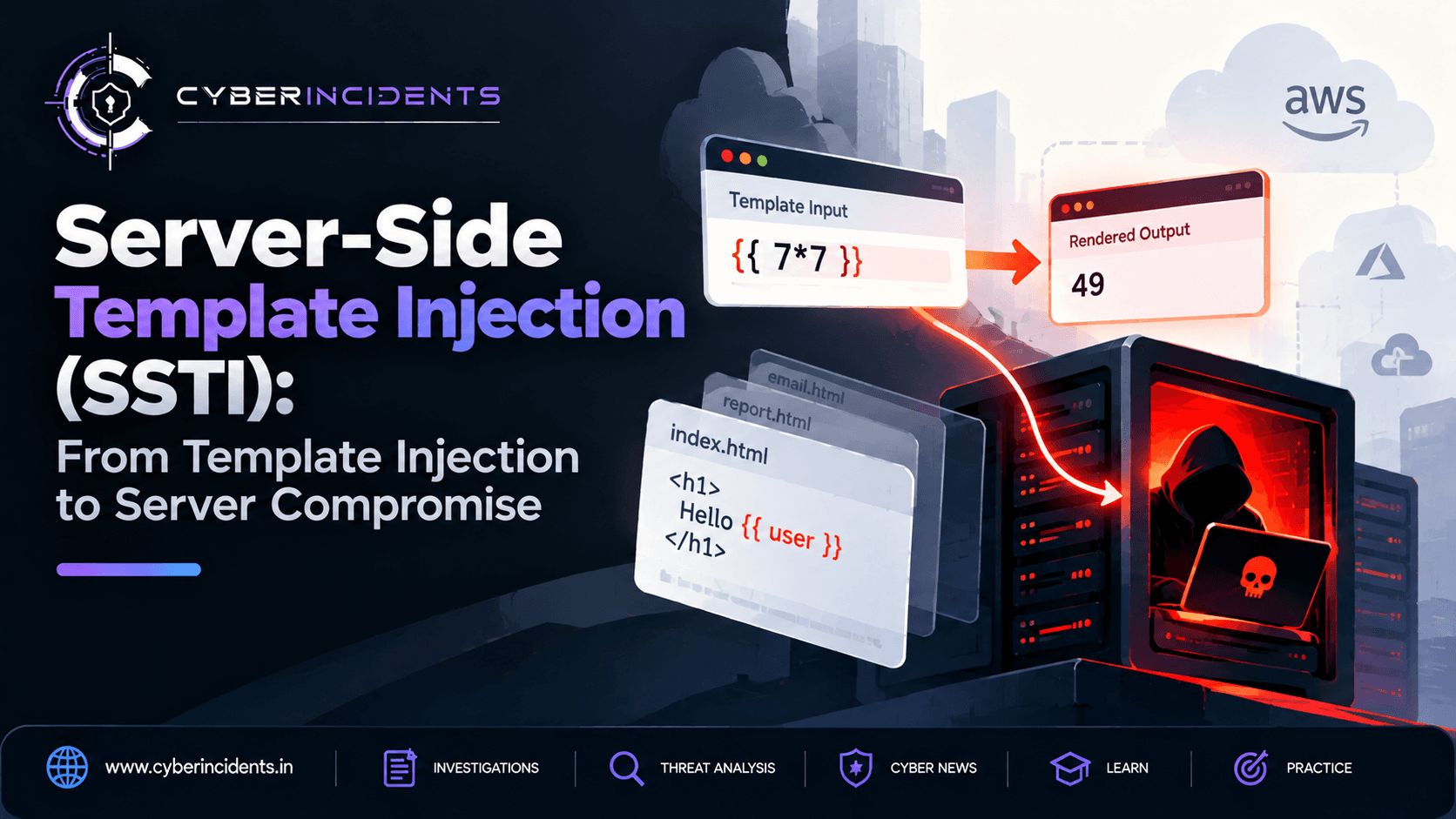
Server-Side Template Injection (SSTI): From Template Injection to Server Compromise
October 12, 202614 min read

Server-Side Template Injection (SSTI): From Template Injection to Server Compromise

Server-Side Template Injection (SSTI) occurs when an application processes untrusted user input as template-engine instructions instead of treating it as ordinary data. Depending on the template engine, configuration and application privileges, an attacker may be able to access sensitive information, bypass application controls or achieve server-side code execution.

Read More→
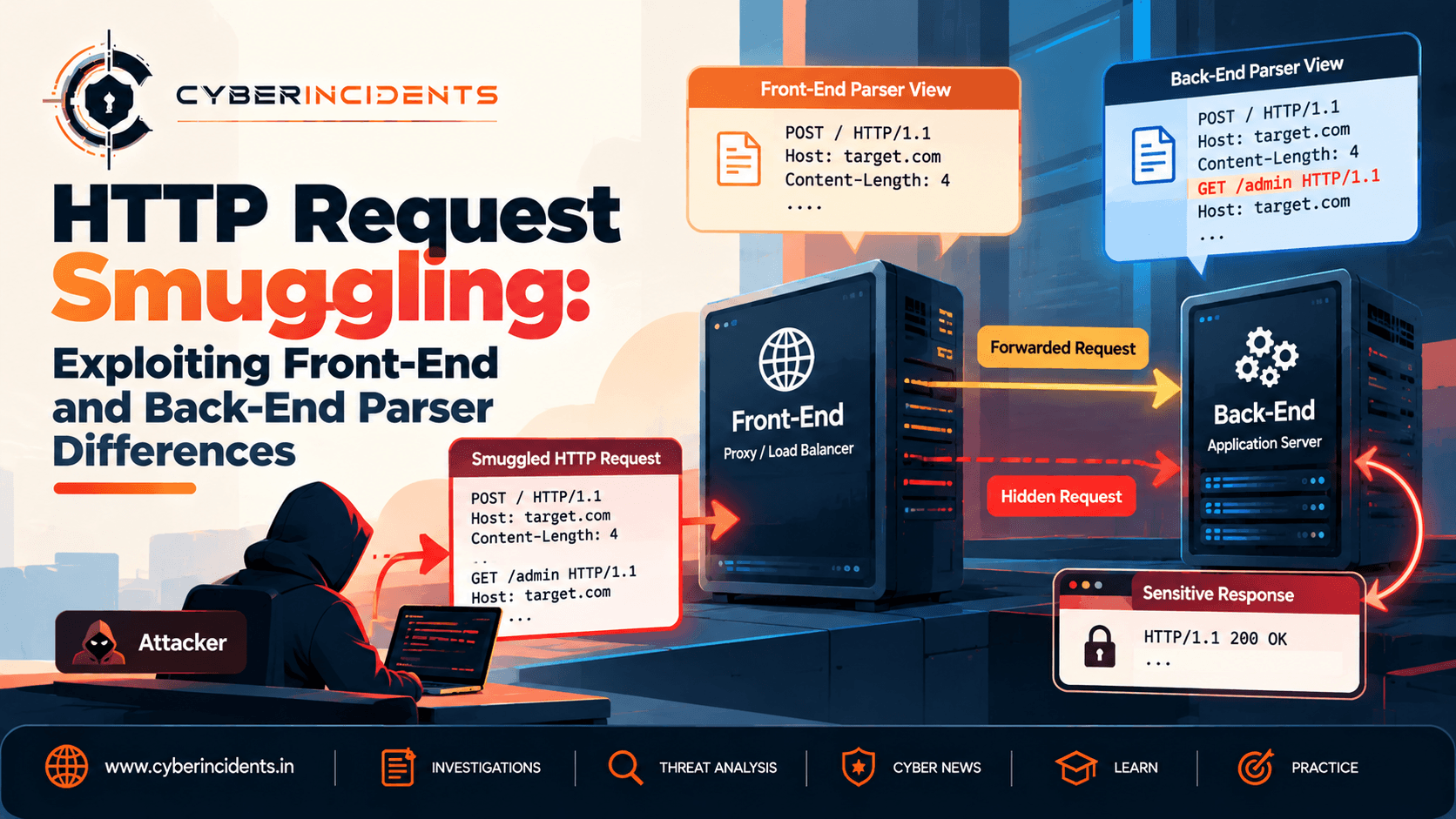
HTTP Request Smuggling: Exploiting Front-End and Back-End Parser Differences
October 12, 202612 min read

HTTP Request Smuggling: Exploiting Front-End and Back-End Parser Differences

HTTP Request Smuggling is a web security vulnerability that occurs when front-end and back-end HTTP servers interpret the boundaries of an HTTP request differently. An attacker may exploit this disagreement to make one server interpret a single request as multiple requests, potentially interfering with requests processed by other users.

Read More→
Server-Side Request Forgery (SSRF): Exploiting Internal Services and Cloud Metadata
October 12, 202614 min read

Server-Side Request Forgery (SSRF): Exploiting Internal Services and Cloud Metadata

Server-Side Request Forgery (SSRF) is a web application vulnerability that allows an attacker to manipulate a server into making HTTP or other network requests to destinations selected by the attacker. Because these requests originate from the server, they may reach internal services, restricted network resources, or cloud metadata endpoints that are not directly accessible from the internet.

Read More→