Cyber News
Fake ChatGPT, Gemini, and Claude Ad Portals Capture Credentials and MFA Codes
Category: Phishing / Artificial Intelligence
12 min read

Category: Cybercrime / Data Breach Focus: Threat Intelligence, Cybercrime, Data Theft, Extortion, Cloud Security, Incident Investigation

The cybercrime ecosystem is increasingly characterized by loosely organized groups, shared infrastructure, affiliate relationships, and threat actors who move between different criminal operations.
The reported detention in Jordan of a suspected ShinyHunters member known online as “Rey” provides an important example of this evolving ecosystem.
According to reporting cited in the supplied source, Jordanian authorities detained Saif al-Din Khader, who allegedly used the aliases Rey and ReyXBF, on September 29, 2026. Sources familiar with the matter reportedly said that Khader was cooperating with the U.S. Federal Bureau of Investigation (FBI) and other law-enforcement agencies to help identify additional members of the group.
The development is significant not because one alleged cybercriminal was detained, but because information obtained from suspects, seized infrastructure, communications, and compromised systems can potentially expose relationships between otherwise apparently independent cybercriminal operations.
The case also illustrates an important trend in modern cybercrime: a threat group can function more like a brand or business model than a traditional centralized organization.
The supplied reporting describes ShinyHunters as an extortion operation associated with large-scale data theft, cloud and SaaS compromises, third-party access, stolen authentication tokens, and data-leak campaigns. However, several specific claims concerning breaches and stolen data remain allegations and should not be treated as independently established facts.
ShinyHunters is a cybercrime name associated with large-scale data theft and extortion campaigns.
The supplied reporting describes the group as having targeted organizations and cloud-based environments, with activity associated with data theft, extortion, and access to SaaS environments. It also describes the group as having evolved considerably since its emergence around 2020.
Researchers cited in the source characterize ShinyHunters less as a conventional organization with a fixed membership structure and more as a persistent cybercrime brand and business model.
According to the cited research, the ecosystem involves different participants performing different roles, including:
Initial access
Social engineering
Recruitment
Data theft
Extortion
Monetization
Management of leak operations
This modular structure is important for defenders because identifying one member does not necessarily mean the entire operation has been dismantled.
The source describes this resilience as a result of a division of labor in which different actors can participate in different stages of an attack while operating under a shared identity or brand.
The threat actor known online as Rey was reportedly detained by authorities in Jordan on September 29, 2026.
The supplied reporting identifies the individual as:
Name: Saif al-Din Khader
Known alias: Rey
Additional alias: ReyXBF
According to sources cited by Reuters, Khader was reportedly cooperating with the FBI and international law enforcement agencies.
One reported aspect of the cooperation involved investigators examining his electronic devices and digital communications to identify other suspected members and associates.
From an incident-response and digital-forensics perspective, this is significant.
Electronic devices can potentially provide evidence such as:
Communication records
Authentication information
Files
Browser artifacts
Cryptocurrency information
Infrastructure details
Contact relationships
Operational documentation
Credentials or tokens
Links to other accounts or systems
However, the existence or recovery of such evidence does not automatically prove that every associated account or individual participated in criminal activity.
Investigators must establish attribution through corroborating evidence.
A cybercrime investigation does not end when one suspect is identified.
One of the most valuable outcomes of an arrest can be the discovery of the broader infrastructure and relationships surrounding the suspect.
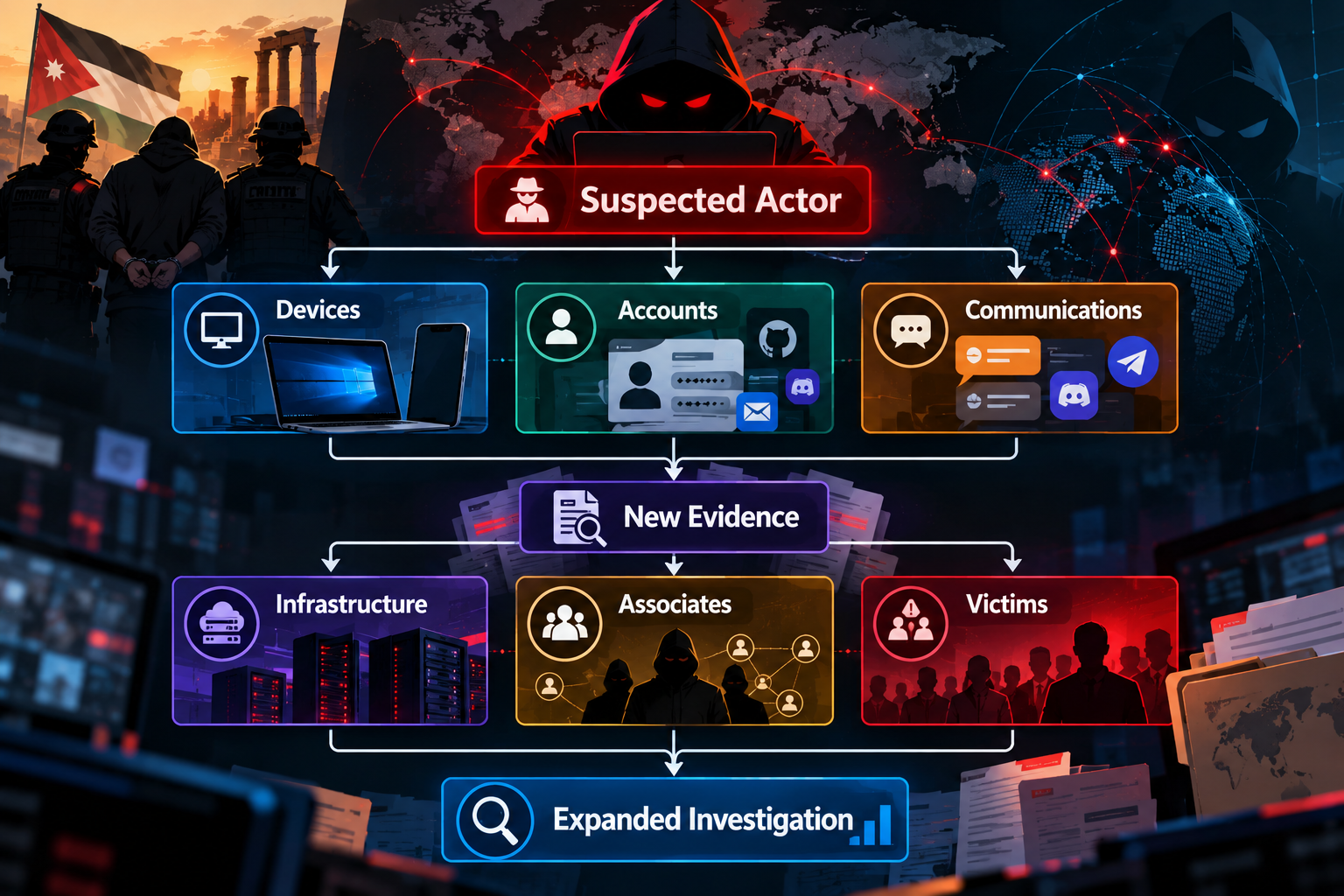
This is why law-enforcement investigations often focus on relationships, rather than only individual devices or accounts.
A single compromised endpoint may reveal another account.
That account may reveal another infrastructure provider.
That infrastructure may reveal another victim.
The investigation therefore becomes a graph rather than a single incident.
One of the most important aspects of the activity described in the supplied material is the focus on cloud-based platforms and SaaS environments.
The reporting states that the group has commonly targeted third-party integration companies and used stolen authentication tokens to access connected SaaS environments and obtain customer information.
This demonstrates an important change in the modern attack surface.
Organizations increasingly depend on:
SaaS applications
Third-party integrations
API connections
OAuth applications
Service accounts
Cloud identities
External vendors
Managed service providers
An attacker does not necessarily need to compromise the victim's primary infrastructure directly.
Instead, the attacker may target a trusted third party.
Consider the following simplified architecture:
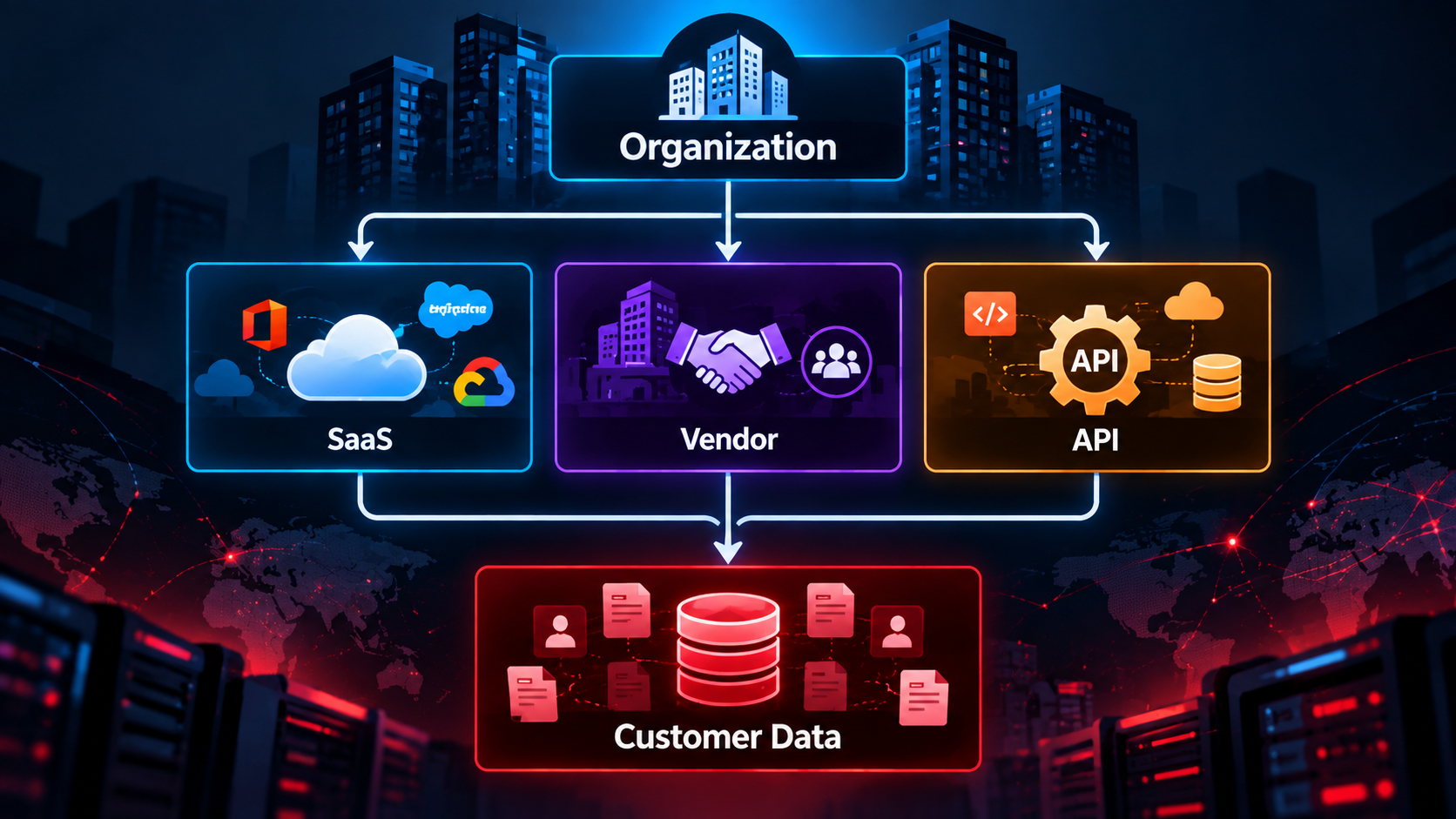
If an attacker compromises the vendor or integration layer, they may inherit access to resources belonging to the primary organization.
This creates a dangerous trust relationship:
Trusted Vendor ↓ Valid Authentication ↓ Connected SaaS Platform ↓ Customer DataFrom the organization's perspective, the activity may initially look legitimate because the attacker could be using:
Valid credentials
Valid tokens
Approved APIs
Existing integrations
Normal SaaS functionality
This makes traditional perimeter-based security less effective.
The supplied reporting specifically discusses the use of stolen authentication tokens.
Tokens can be particularly valuable to attackers because they may allow access without requiring the original username and password.
A simplified attack chain could look like:
Credential / Session Theft ↓ Authentication Token Obtained ↓ Token Reused ↓ Cloud / SaaS Authentication ↓ Authorized Functionality ↓ Data Access ↓ Data ExfiltrationThe important security lesson is that successful authentication does not automatically mean legitimate activity.
SOC teams therefore need to analyze:
Source IP
Device information
User-agent information
Geographic anomalies
Authentication patterns
Token creation and use
Application context
API activity
Data-access volume
Unusual download behavior
OAuth application activity
The supplied reporting states that ShinyHunters claimed to have breached an FBI system and subsequently moved laterally into FBI-managed AWS GovCloud systems.
The attackers reportedly claimed to have stolen between 2 TB and 3 TB of data, including information relating to current and former FBI employees, job applicants, medical and psychiatric information, and records from internal services.
However, the source explicitly states that these claims were not independently verified, and although the FBI confirmed that it was investigating claims of unauthorized activity, it did not confirm that the alleged data theft occurred.
This distinction is extremely important for cybersecurity research.
A responsible security article should distinguish between:
Threat actor claim
and
Independently verified incident fact
Failure to make that distinction can result in inaccurate attribution and misinformation.
The source states that ShinyHunters claimed to have used an alleged Oracle PeopleSoft zero-day vulnerability to compromise FBI systems before moving laterally into FBI-managed AWS GovCloud systems.
Again, the source explicitly states that this claim had not been independently verified.
For security researchers, this is an important example of why vulnerability claims should be treated carefully.
A claim of:
"zero-day exploited"
does not establish:
The vulnerability existed
The vulnerability was actually a zero-day
The vulnerability was exploited successfully
The claimed attack path was accurate
The claimed impact occurred
Those conclusions require technical evidence.
The reported FBI incident allegedly involved movement from an initial compromised environment into AWS GovCloud systems.
Lateral movement generally refers to an attacker moving from one compromised system, account, or environment to another.
A simplified model is:
Initial Access ↓ Compromised System ↓ Credential / Token Discovery ↓ Privilege Expansion ↓ Internal Access ↓ Cloud / SaaS Access ↓ Data Discovery ↓ Data ExfiltrationFor SOC analysts, lateral movement can be identified through correlations such as:
New authentication sources
Unusual administrative access
Remote sessions
New service accounts
Unusual API activity
Cross-account access
Privilege changes
Access from unfamiliar devices
Abnormal cloud role assumptions
The supplied reporting connects Rey with multiple cybercrime operations and aliases.
The source states that Rey had previously been associated with HellCat, BreachForums, and Scattered LAPSUS$ Hunters, while also being linked to multiple data-theft incidents.
This demonstrates why threat intelligence teams should avoid treating cybercrime groups as rigid organizations.
An individual actor can:
Actor │ ├── Alias A │ ├── Alias B │ ├── Group A │ ├── Group B │ └── Group CAttribution should therefore be based on multiple evidence types rather than simply matching a username.
Useful attribution evidence can include:
Infrastructure reuse
Cryptocurrency transactions
Communication accounts
Malware tooling
TTP overlap
Victimology
Operational timing
Reused credentials
Device artifacts
Forum identities
Seized infrastructure
The FBI's reported comments about seized infrastructure highlight another important investigative concept.
Cybercriminal infrastructure may contain evidence about:
Victims
Administrators
Affiliates
Credentials
Payment information
Malware
Communication records
Hosting providers
Command infrastructure
Operational procedures
For this reason, infrastructure takedowns can have effects beyond simply taking a website offline.
They can provide investigators with historical evidence and relationship data.
The source reports that shortly after the reported detention, a ShinyHunters-linked messaging account became inactive and the group's data leak site went offline.
The group's primary representative reportedly stopped responding to media inquiries.
However, the source also states that a new ShinyHunters data leak site subsequently appeared, suggesting that other individuals may have continued operating under the ShinyHunters identity.
This is an important illustration of cybercrime resilience.
Taking down one component does not necessarily eliminate the underlying operation.
A resilient criminal ecosystem can potentially:
Infrastructure disrupted ↓ Members ↓ New infrastructure ↓ New communication channels ↓ Continued operationsThis is why defenders should monitor behavior and infrastructure, not only group names.
The incident provides several lessons for threat intelligence teams.
Threat actors may operate under multiple usernames.
Threat intelligence analysts should correlate:
Usernames
Email addresses
Cryptocurrency addresses
Infrastructure
Domains
Messaging accounts
Forum accounts
An IP address can change.
A domain can disappear.
A username can change.
Relationships between infrastructure, accounts, victims, and techniques may provide stronger intelligence.
Threat intelligence reports should distinguish:
Confirmed
Evidence directly establishes the fact.
Reported
A credible source has reported the information.
Claimed
A threat actor or third party claims the information.
Assessed
Researchers infer the relationship based on available evidence.
This prevents analysts from presenting uncertain information as established fact.

Organizations concerned about similar attacks should monitor several areas.
Look for:
Impossible-travel authentication
New geographic locations
Unusual device registrations
New MFA methods
Suspicious OAuth applications
Unusual token activity
Monitor:
Bulk downloads
Unusual API requests
Large data exports
New integrations
Privilege changes
Administrative activity
Monitor:
IAM changes
New access keys
Role assumptions
Cross-account access
Unusual API calls
Security-control changes
Look for:
Large data transfers
Unusual file downloads
Access to previously unused repositories
Unusual database queries
External sharing activity
If a SOC receives an alert indicating possible account compromise or unusual SaaS activity, analysts can follow this workflow:
Determine whether the activity actually occurred and whether the alert is a true positive.
Collect:
Username
Role
Department
Normal location
Normal device
Privilege level
Review:
Source IP
Location
Device
User agent
Authentication method
MFA events
Token activity
Look for:
Data downloads
API calls
Permission changes
OAuth applications
Administrative operations
Determine whether similar activity occurred against:
Other users
Service accounts
Administrators
Connected applications
Identify:
What information was accessed?
What was downloaded?
Was information externally transferred?
Was data modified or deleted?
Depending on the evidence:
Revoke sessions
Revoke tokens
Reset credentials
Disable compromised accounts
Remove malicious applications
Restrict suspicious access
Search for:
New accounts
OAuth applications
API credentials
Access keys
New forwarding rules
Privilege changes
Persistence mechanisms
Record:
Timestamp
User
Source IP
Device
Action
Application
Resource accessed
Evidence source
Continue reading
Cyber News
Category: Phishing / Artificial Intelligence
Cyber News
Severity: High CVSS: 8.7 Affected Products: Citrix NetScaler ADC & NetScaler Gateway Attack Type: Denial of Service / Possible Remote Code Execution
Cyber News
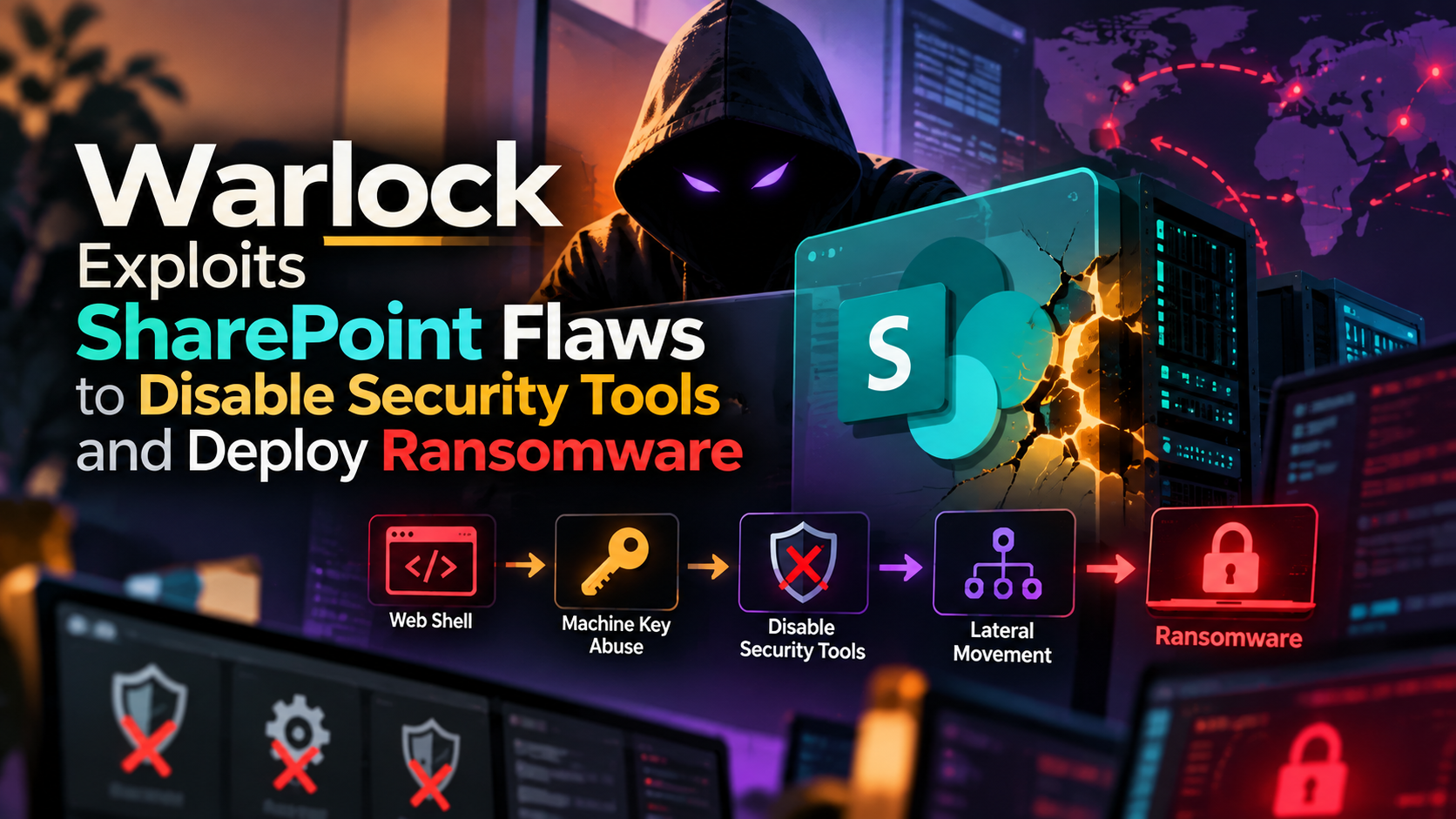
Threat Actor: Warlock / Longlegs / Storm-2603 / Gold Salem
3 entries, most recent posts.
Level: Intermediate
Category: Phishing / Artificial Intelligence
Severity: High CVSS: 8.7 Affected Products: Citrix NetScaler ADC & NetScaler Gateway Attack Type: Denial of Service / Possible Remote Code Execution