cloud attacks
Level: Beginner
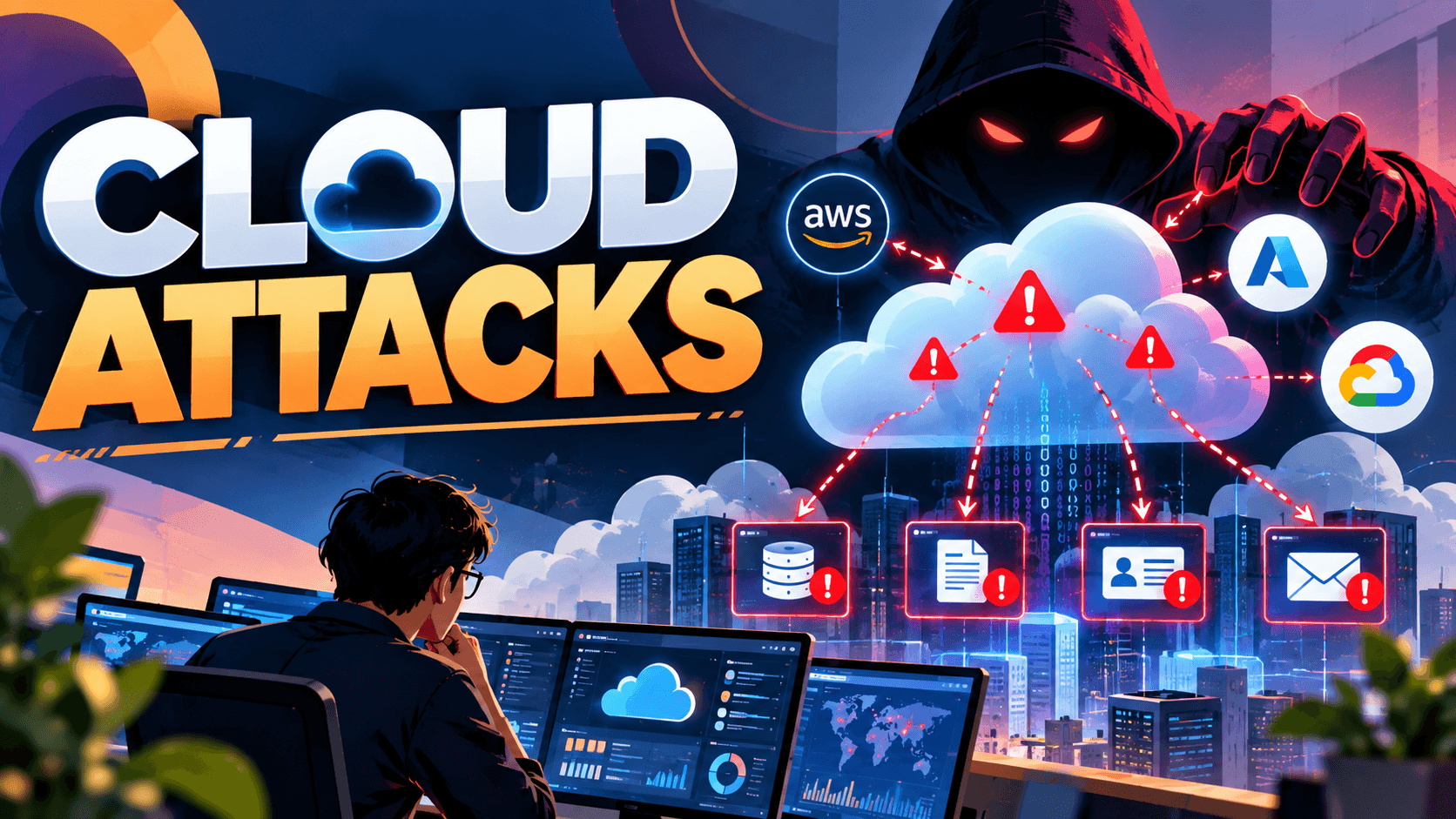
Cloud computing has changed how organizations store data, run applications, and manage infrastructure. Services from providers such as AWS, Microsoft Azure, and Google Cloud allow organizations to quickly deploy systems without maintaining all the underlying hardware themselves.
However, cloud environments also introduce new security risks. Cloud attacks are cyberattacks that target cloud accounts, services, workloads, configurations, identities, or data.
Why Are Cloud Environments Targeted?
Cloud environments contain valuable resources such as:
Customer and business data
Databases and storage
Application workloads
API credentials
Cloud accounts
Encryption keys
Computing resources
Attackers may target these resources to steal data, gain unauthorized access, disrupt services, or use cloud infrastructure for their own purposes.
Common Cloud Attacks
1. Cloud Misconfiguration
One of the most common cloud security risks is incorrect configuration.
Examples include:
Publicly accessible storage
Excessive permissions
Exposed management interfaces
Insecure security groups
Unprotected databases
A simple configuration mistake can expose sensitive information to the internet.
2. Cloud Credential Theft
Attackers may steal cloud credentials through:
Phishing
Malware
Credential leaks
Exposed API keys
Compromised developer accounts
Once valid credentials are obtained, attackers may access cloud resources while appearing to be a legitimate user.
3. IAM and Privilege Escalation Attacks
Identity and Access Management (IAM) controls who can access cloud resources and what actions they can perform.
If an attacker compromises a low-privileged account, they may attempt to discover permissions that allow them to obtain additional privileges.
For example:
Compromised Account → Permission Abuse → Privilege Escalation → Sensitive Resources
4. Exposed Cloud Storage
Cloud storage services can contain highly sensitive information.
If access controls are incorrectly configured, files or databases may become accessible to unauthorized users.
Potentially exposed information could include:
Customer records
Backups
Source code
Credentials
Business documents
Application data
5. Cloud Metadata Service Attacks
Cloud workloads may expose metadata services that provide information about the environment.
If a vulnerable application allows an attacker to interact with a metadata service, the attacker may potentially obtain sensitive information such as temporary credentials.
This makes protecting cloud workloads and restricting unnecessary metadata access important.
6. API Attacks
Cloud environments rely heavily on APIs.
Attackers may target APIs through:
Weak authentication
Broken authorization
Exposed credentials
Excessive permissions
Improper input validation
A compromised API can provide access to cloud resources without requiring direct access to the underlying infrastructure.
7. Container and Kubernetes Attacks
Containers and Kubernetes are widely used for cloud-native applications.
Security weaknesses can occur through:
Vulnerable container images
Excessive container privileges
Exposed Kubernetes interfaces
Weak authentication
Insecure configurations
Compromised secrets
A compromised container may also become a starting point for further activity within the environment.
8. Cloud Cryptojacking
Attackers sometimes compromise cloud accounts or workloads and use the organization's computing resources to mine cryptocurrency.
The organization may notice:
Unexpected CPU usage
Increased cloud bills
Unknown workloads
Unusual resource consumption
Why Cloud Attacks Are Dangerous
Cloud attacks can have a large impact because a single compromised identity or configuration may provide access to many interconnected resources.
Possible consequences include:
Data breaches
Account compromise
Privilege escalation
Data destruction
Service disruption
Resource abuse
Financial losses
Cloud infrastructure compromise
How Organizations Detect Cloud Attacks
Security teams monitor cloud environments for unusual activity such as:
Login attempts from unusual locations
New or unexpected access keys
Sudden privilege changes
Unusual API activity
Large amounts of data being accessed
Unexpected storage access
New cloud resources being created
Unusual network connections
Unexpected changes to security configurations
Abnormally high resource consumption
Cloud audit logs and security monitoring platforms are particularly important for investigating this activity.
How to Protect Cloud Environments
Organizations can reduce cloud security risks through:
Strong MFA
Least-privilege IAM policies
Regular permission reviews
Secure cloud configurations
Encryption
Network segmentation
Secrets management
Secure API authentication
Vulnerability management
Cloud security monitoring
Logging and alerting
Regular security assessments
Organizations should also understand the shared responsibility model, where the cloud provider and customer have different security responsibilities.
A Simple Example
Imagine a company stores customer information in a cloud storage service.
Normally:
User → Authentication → Authorized Storage Access
If an attacker obtains the user's credentials:
Credential Theft → Cloud Account Compromise → Storage Access → Data Theft
The attacker may not need to exploit a traditional server vulnerability. Valid cloud credentials can be enough to begin the attack.
Cloud Attack Chain
A simplified cloud attack can look like:
Initial Access → Cloud Account/Workload Compromise → Privilege Escalation → Resource Access → Data Theft or Abuse
The exact sequence depends on the cloud service and attack technique.
Key Takeaway
Cloud security is not only about protecting servers. Organizations must also protect identities, permissions, APIs, workloads, storage, configurations, and cloud data.
A small cloud configuration mistake or compromised credential can sometimes expose a large amount of information.
In simple terms:
Secure identities + secure configurations + least privilege + continuous monitoring = stronger cloud security
Latest posts
3 entries, most recent posts.
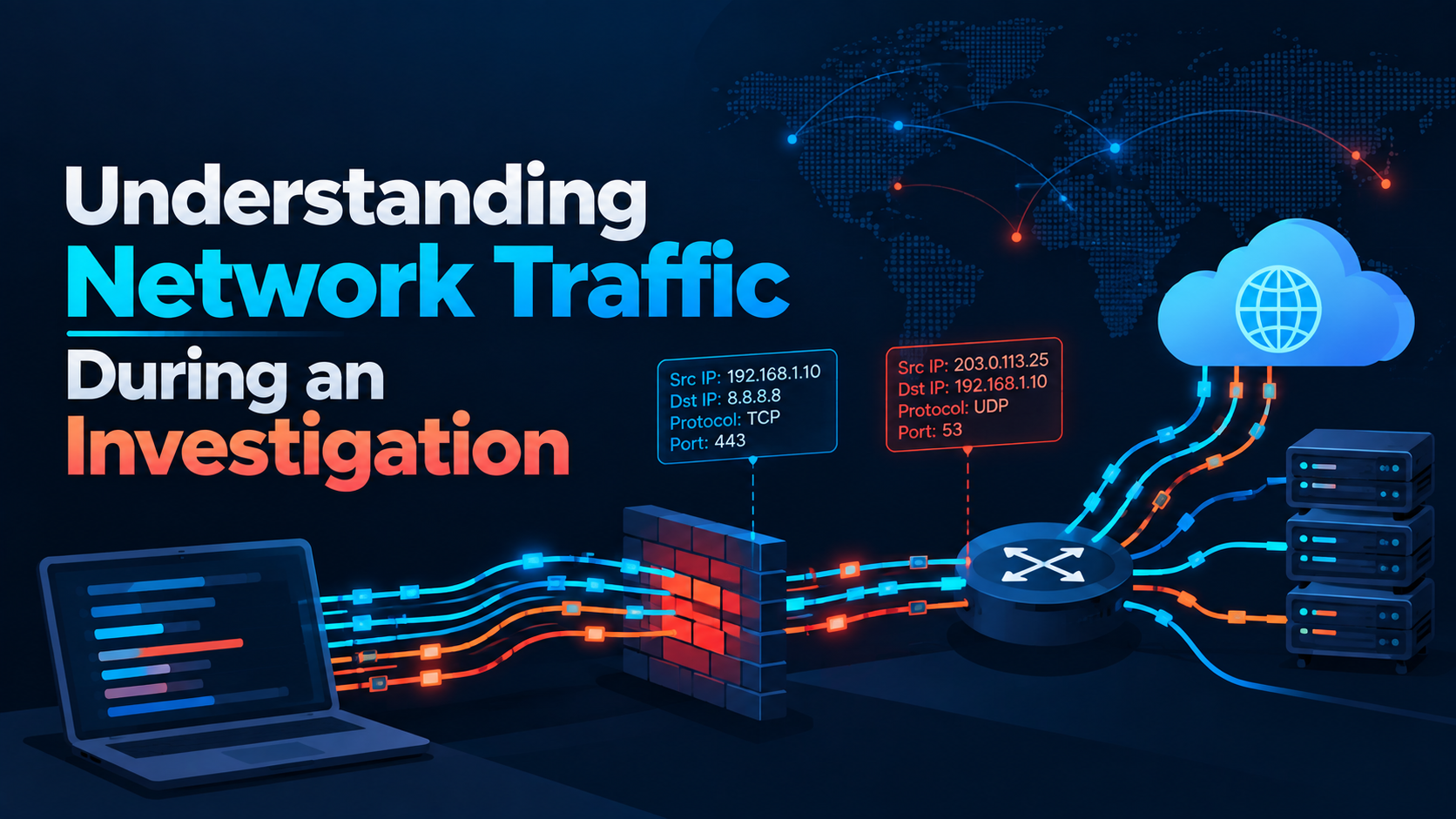
Understanding Network Traffic During an Investigation
Level: Intermediate
Fake ChatGPT, Gemini, and Claude Ad Portals Capture Credentials and MFA Codes
Category: Phishing / Artificial Intelligence

Citrix patches NetScaler SAML zero-day exploited in attacks
Severity: High CVSS: 8.7 Affected Products: Citrix NetScaler ADC & NetScaler Gateway Attack Type: Denial of Service / Possible Remote Code Execution